RISING DAMP ESSEX
Rising Damp Surveys & Treatment in Essex
Concerned about damp walls, damaged plaster or peeling paint? We investigate the likely cause and explain the right next steps for your property.
✓ Damp surveys ✓ Effective treatment ✓ Long-lasting protection
UNDERSTANDING THE PROBLEM
Start with the cause, not the stain
Damp patches and damaged plaster can have several causes. Before recommending work, it is important to understand what is happening in the building and why moisture is appearing.
Identify the source
We consider rising damp alongside leaks, penetrating moisture, condensation and external defects.
Understand the building
Wall construction, ground levels, ventilation and previous repairs all help build a clearer picture.
Choose the right response
Recommendations should address the cause, not simply cover up the visible damage.
KNOW THE SIGNS
What is rising damp?
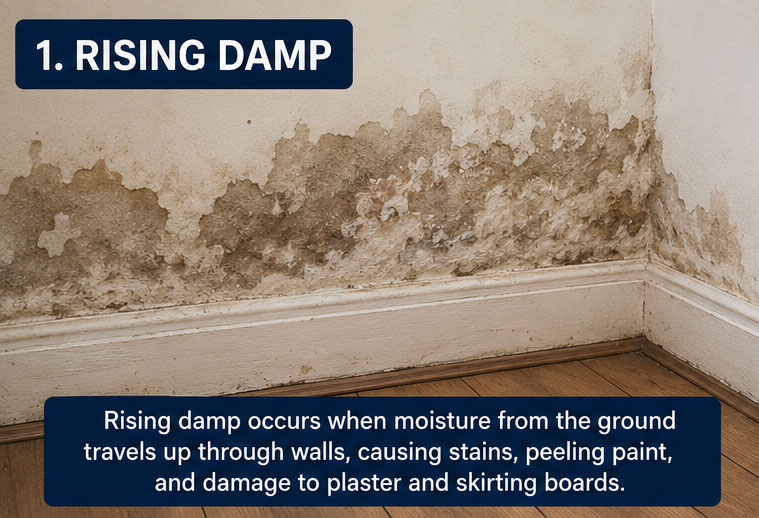
Rising damp is moisture moving upwards through porous masonry from the ground. It can sometimes bypass or bridge an existing damp-proof course. Correct diagnosis matters because other problems can create similar marks on walls.
Wall and floor junctions
Look at the pattern and position of dampness, not just the darkest patch.
External ground levels
Raised paths, soil or render may bridge a damp-proof course.
Other moisture sources
Leaks, rainwater defects and condensation should also be considered.
A CLEAR, PRACTICAL PROCESS
A property assessment built around the evidence
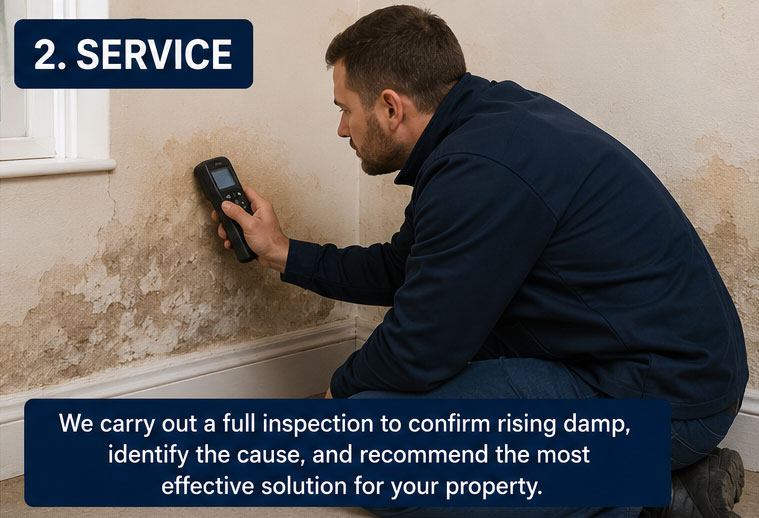
A useful inspection looks at the affected area, the building itself and possible sources of moisture. Any recommendations should follow the findings.
01. Inspect the symptoms
Consider the position and pattern of dampness, affected finishes and accessible areas inside and outside.
02. Consider the causes
Assess whether rising damp is likely, or whether leaks, penetrating moisture or condensation may explain the signs.
03. Explain the options
Discuss suitable next steps and any remedial work that is supported by the inspection findings.
SPOT THE WARNING SIGNS
What to look for around your property
These signs can be associated with damp, but none proves rising damp on its own. The pattern and building conditions need to be considered.
TREATMENT THAT FITS THE PROPERTY
Choosing the right repair for the building
There is no single treatment for every damp problem. The right response depends on the source of moisture, wall construction and condition of the affected finishes.
Damp-proof course work
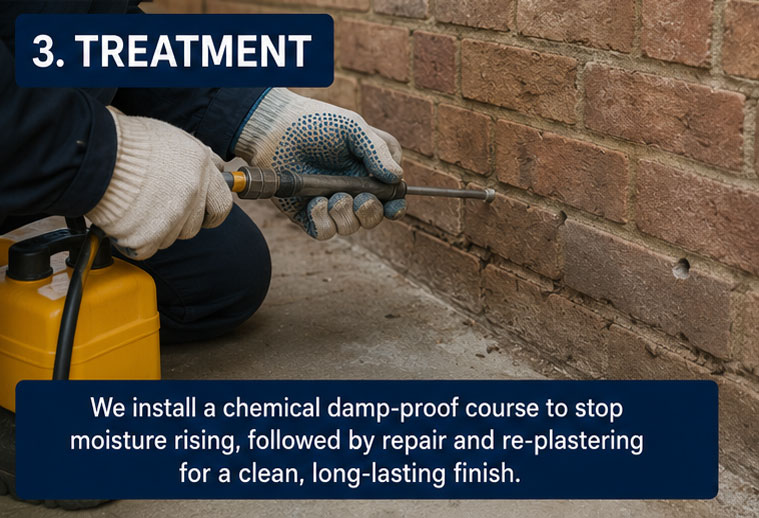
Repair or installation may be considered where the findings show it is appropriate for the building and the cause identified.
External moisture control
Raised ground levels, bridged courses, defective rainwater goods and other routes for water entry may need attention.
Plaster and internal finishes
Where plaster is damaged or salt-contaminated, suitable removal and replastering may form part of the remedial work.
LOCAL HELP ACROSS ESSEX
Clear advice for homeowners, landlords and property managers
Damp problems can have more than one contributing factor. We look beyond the visible mark and consider the building, possible routes for moisture and any previous repairs.
COMMON QUESTIONS
Rising damp questions answered
Does every damp patch near the floor mean rising damp?
No. Penetrating moisture, plumbing leaks, condensation and other building defects can produce similar symptoms. The cause should be investigated before treatment is selected.
Can a damp-proof course be bridged?
Yes. Raised paths, soil, render or other materials can sometimes allow moisture to bypass an existing damp-proof course.
Will damp treatment always involve replastering?
No. Replastering may be needed where finishes are damaged or contaminated, but the scope depends on the inspection.
Do you cover areas outside Chelmsford?
Coverage includes Chelmsford and surrounding Essex communities. Contact us with your postcode to check availability.
NEED HELP WITH DAMP?
Talk through the damp in your property
Tell us where you have noticed damp patches, damaged plaster or salt deposits. We can discuss the issue and help you understand the next step.